Sedentary multitasking is what machines do, but ever since the pandemic, that’s all WE do. Are we becoming computers? Do we exist just to perform knowledge-systems labor?
We are:
1. Synchronizing activities
2. Entering and exiting schedules
3. Perfecting chocolate chip cookie recipes
⭐⭐⭐Let’s begin:
When doing all life activities in one place, such as a domestic setting, synchronizing everything into one master schedule is tough. Your perception of time stretches and contracts depending on the task… writing a project proposal versus nodding dutifully in an online meeting. Did they said three or five? What’s the topic now?
2. Our work-life reality has flattened. To transition between tasks, we must re-expand space with our bodies, not just our minds.Reset and prep for the next task by walking around the house. 5x across the room. Go down the street. Remember to come back. Take an object you will use later—a remote, pen, measuring spoon—and deposit it in the mailbox. When it’s time, retrieve it. This “commute” reboots intentionality. Can a computer do that?
Put a chocolate chip cookie in the mailbox and take a nibble out of it each circulation for dopamine. Can a computer byte? I mean bite? Can the sugar dissolve on its tongue binding to receptors T1R2/T1R3s giving that sweet sensation?
3. There’s no such thing as an imperfect chocolate chip cookie recipe 🍪 as the CCC is perfection itself.
🍪CCC = Perfection🍪
Chocolate : loved and consumed by millions of humans who are not computers.
Chip : you can add any kind of chip into your cookie: nuts, sprinkles, dried fruit, cpus, gpus, ram, or despair that is not made by computers.
Cookie : round, a great and popular shape loved by millions of humans across time but possibly also computers.
laughter comes from a place deeply human, so they say.
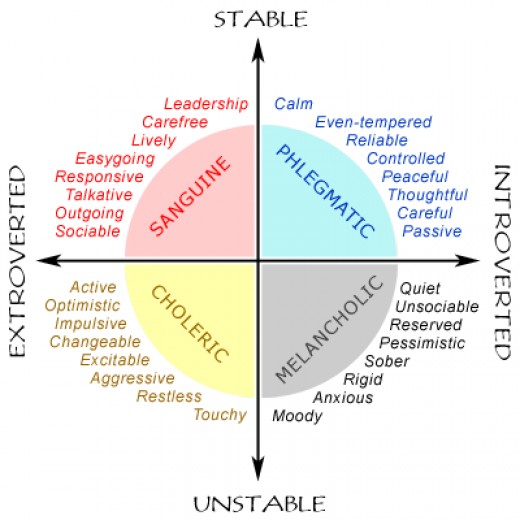
for example, the Ancient Greek and Roman physicians believed the 4 humors- bodily fluid type yuckies- affected human health and disposition. there were only 4 of them: choleric, melancholic, sanguine, phlegmatic–and they were tied to seasons or elements, similar to Indian Ayurveda medicine doṣas, (pañca-bhūta): earth, water, fire, air, (and space).
They typology is as follows:
Blood (sanguis) → associated with air, spring, and a cheerful temperament (sanguine).
Phlegm (phlegma) → linked to water, winter, and a calm, sluggish temperament (phlegmatic).
Yellow bile (choler) → tied to fire, summer, and an irritable, aggressive temperament (choleric).
Black bile (melaina chole) → connected with earth, autumn, and a melancholic, depressive temperament (melancholic).
But what do the humors have to do with ha-ha humor?
I first became interested in the forms of humor like sarcasm and parody in 90s TV shows and literature, wondering how we humans developed a sense of humor. it’s a very subjective and human / biological activity– like crying or compassion, but I find it more elusive than other emotions. just as diverse as our personalities, what we find funny differs- from farts, Ren and Stimpy, to Mr. Bean and cats.
but do we only laugh because something is ha ha funny? no.
because after some click-clacking, i found sardonic as a form of humor that comes from the Greek “sardónios, refering to someone curling their lips at danger, laughing in its face.
from wikipedia: “a sardonic action is one that is ‘disdainfully or skeptically humorous’. a form of wit or humour, being sardonic often involves expressing an uncomfortable truth in a clever and not necessarily malicious way, commonly with a degree of cynicism.[3]”
an uncomfortable truth you say? So one has to be devoid of humor to face a truth but at the same time hold an incredulous expression to convey the inhumanity of it all?
furthermore look at this grim and dark origin of sardonic: “among the very ancient people of sardinia… it was customary to kill old people. while killing their old people, the sardi laughed loudly. this is the origin of notorious sardonic laughter (eugen fehrle, 1930).”
violence is a natural response to structural oppression of many forms. language, cultural, social, political, institutional, but killing our elderly? what could be the reason for this? is it an act of mercy knowing that the end of one’s material existence should be relieved of suffering and indignity? one could not mercy kill without having an incongruent reaction to it, like laughing. this idea is supported by the following:
“laughter accompanies the passage from death to life; it creates life and accompanies birth. consequently, laughter… nullifies murder as such, and is an act of piety that transforms death into a new life.”
from the author of dune: “the person who experiences greatness must have a feeling for the myth she is in. And she must have a strong sense of the sardonic. This is what uncouples her from belief in her own pretensions. The sardonic is all that permits her to move within herself. Without this quality, even occasional greatness will destroy a human.”
So the sardonic helps ground people and prevents them from abstraction and inhumanity. laughter is guttural: irrational, physiological, and VERY HUMAN.
Laughter is also social. According to the following source, we might laugh when there is “shared relief at the passing of danger. And since the relaxation that results from a bout of laughter inhibits the biological fight-or-flight response, laughter may indicate trust in one’s companions.” (https://science.howstuffworks.com/life/inside-the-mind/emotions/laughter.htm)
“Provine has also noted that laughter is highly behaviorally contagious…like yawning, contagious laughter is modified by social factors.”
Laughter as catharsis:
There is a link between laughter with better pain tolerance. In an experiment those who induced / forced laughter had a drop in blood pressure and cortisol levels in comparison to those who did not simulate laughter.
All of this supports the argument that laughter and humor are complicated emotions that can relieve as much as it can reveal what lurks in the dark (in order to relinquish it).
So ask yourself, if the average adult laughs 17 times a day, are you getting your daily dose of laughter?
z. Find more opportunities for laughter
surround yourself with funny people or places (see t. grandmas below)
y. Induce or simulate laughter even if nothing is externally funny
trick your brain
x. diversify your humor
weird/absurd humor > 20% random or joyful laughter > 50% sarcastic/self sabotaging < 10% animals = 100%


 Noon Mul