Welcome to another episode of “Can’t sleep?” with your host, “I Forgot to Do Something”. It’s another great night for not sleeping.
Sleeplessness shares good company with hiccups and the appendix: leftover primal functions and medical mysteries.
Sleeplessness is commonly the work of an overstimulated mind. When it’s time to knock out for the day, there’s just one last thing to finish, a nagging worry you want to address, a… memory from 14 years ago needing remembering. And then, you’ve dipped into half the required slumber you need to be “A” game.
Try this new Counting Sheep:
Visualize: See yourself as asleep.
Lists are known to induce drowsiness: Pretend you are telling a friend your bedtime routine, walking through it step by step.
Describe how you wind down. Describe a body check. Toes intact. As far you as can tell, organs intact, content. Saw aloud one word descriptions of how you feel physically and emotionally.
Like lists, dry and technical explanations bore yourself into a slumber: Pretend a child doesn’t know what “blank” is, so you explain it to them. Fill in ‘blank’ with any topic of your choice that’s 3 degrees from things you really like to talk about. What is the function of blank?
If you can’t zzzzzzzzzzzzzz then do the next best: yyyyyyyyyyyyyy. Divide your rest into a few long naps like the (g)olden times. Expect that your internal clock is going to be different for a while.
You can plan the following day’s naps. Here in this sleepless sanctuary, there are naps without judgement. Plus, if you have chronic insomnia, sleep hygiene isn’t important yet. Don’t look at the time– think nothing of calculations. Only use neutral to positive words like sandwich, upstream trout, or pink sky.
Does this nap take place outside in coma inducing sun and breeze? To the sound of waves? or, if you’re not by water, to the smell of lemon flowers? A section of grass is prickly and damp, so you find a more dry spot, maybe a worn rocking chair, the seat a faded a tan Maple, while the backrest a less worn Acacia brown turning Olive. Swinging in a plushy hammock. It feels like the layover between flights…brick feet drag anchor eyelids to your gate…personal luggage becomes cloud. Remember the most desperate of times you wanted to knock out…an all nighter essay, morning class in a warm lecture hall, monotone ramblings in gibberish…
People learn because they want to be competent, independent, discover, and challenge themselves. If something is too hard to learn, why do it?
A boulder might kill you to move, but breaking it into tiny rocks won’t. Without knowing it, what we learn starts to connect with things we know, making our life more interesting and dynamic.
Get comfortable with feeling dumb.
I initially began taking programming classes because I wanted to make my own website and I didn’t like the readymade options out there. I struggled in my first class, barely passing. The content was not only difficult, I was also feeling overwhelmed with how little I didn’t know in the field of Computer Science. That experience prepared me for the next class– I was ready to swim in my cold dumb state. Eventually the body warms up and takes you to the other side.
What does walking and learning have in common? The cross application of different continuity or endurance strategies. Then there’s running, which is just one step further than walking. When running, you create a rhythm between your breathing and body, a metronome for the experience. Thoughts have a hard time thriving. When learning gets difficult, intrusive thoughts insert themselves- observations, feelings, and inner monologue. When in deep concentration or focus, we unconsciously hold our breath. The oxygen deprived brain starts to dislike learning the new material. It hates computer science! It hates baking! When that happens I think about walking or running, just focusing on breathing and moving forward.
When I picked up guitar, my eyes would glaze over the music sheets, so I stuck to playing tab music. The extra effort in reading music was tedious. But to expand the repertoire of songs I could play, I began seriously viewing tutorials. Stripping the outcome from the experience, the tedium went away. Fingers and strings made sounds, and that’s all I needed to think about and enjoy.
Watching foreign TV shows is a great opportunity to write down vocabulary and grammar structures from subtitles. But watching the show takes twice, sometimes three times as long. I just want to find out if Suzy gets her revenge. When does learning hijack leisure? I asked myself, isn’t my recreational time sacred? But like going to a museum or touring a landmark, which I never questioned as both educational and recreational, I realized there were more opportunities to be killing two birds with one stone.
Being a novice at something is the start of growth.Not being a novice at anything is a good way to stay stagnant. People who want safety and comfort– what the learning process threatens– might pick up something and quickly lose interest when it gets difficult. So, to avoid this, enjoy feeling and being dumb.
People are smart, much more than they know.
And only a smart person would knowingly put themselves in situations where they would struggle or feel dumb. Continuously? This phase is just until you pass benchmarks of aptitude, then you get to really enjoy the subject that you’re mastering.
January — named for Janus, Roman god of beginnings and transitions — is either the coldest or warmest month depending on your hemisphere.
“What are your resolutions?” someone texts me. “Goals or hopes?” “Either.” “I see.”
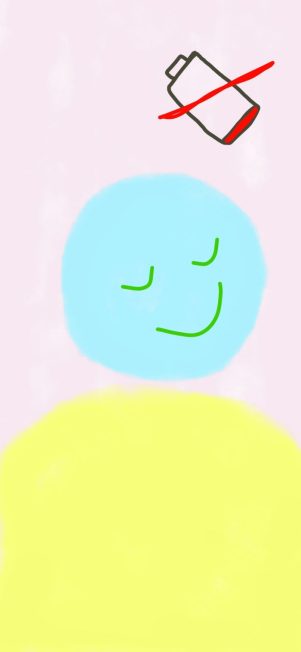
End of conversation because my phone dies. Only the sound outside my window reaches me.
Phone past one battery cycle/day = wasteful and counterproductive. For battery health, if you recharge before 20%, call it the end of the cycle and turn it off. There’s nothing more direct than “off.”
Startle the birds with your laughter. Collect strange looks with HA HA HA.
Laughing, like crying, releases endorphins. We rarely express either in public — but laughter also goes missing in private. “Lol,” “kekeke,” “that’s funny,” we text, but it’s crickets in the house.
Perfectly good endorphins — wasted. So let it out: belly chortle, heart giggle, guttural laughter, wheezing.
Sedentary multitasking is what machines do, but ever since the pandemic, that’s all WE do. Are we becoming computers? Do we exist just to perform knowledge-systems labor?
We are:
1. Synchronizing activities
2. Entering and exiting schedules
3. Perfecting chocolate chip cookie recipes
⭐⭐⭐Let’s begin:
When doing all life activities in one place, such as a domestic setting, synchronizing everything into one master schedule is tough. Your perception of time stretches and contracts depending on the task… writing a project proposal versus nodding dutifully in an online meeting. Did they said three or five? What’s the topic now?
2. Our work-life reality has flattened. To transition between tasks, we must re-expand space with our bodies, not just our minds.Reset and prep for the next task by walking around the house. 5x across the room. Go down the street. Remember to come back. Take an object you will use later—a remote, pen, measuring spoon—and deposit it in the mailbox. When it’s time, retrieve it. This “commute” reboots intentionality. Can a computer do that?
Put a chocolate chip cookie in the mailbox and take a nibble out of it each circulation for dopamine. Can a computer byte? I mean bite? Can the sugar dissolve on its tongue binding to receptors T1R2/T1R3s giving that sweet sensation?
3. There’s no such thing as an imperfect chocolate chip cookie recipe 🍪 as the CCC is perfection itself.
🍪CCC = Perfection🍪
Chocolate : loved and consumed by millions of humans who are not computers.
Chip : you can add any kind of chip into your cookie: nuts, sprinkles, dried fruit, cpus, gpus, ram, or despair that is not made by computers.
Cookie : round, a great and popular shape loved by millions of humans across time but possibly also computers.
Make something, and make it with love. Or destroy something, and destroy it with relish.
Do yourself a favor and clean up later. I mean, wayyyy later. Let the sweat equity show, look at the mess and materials behind the final product…pencil shavings, paint sploshes, apple cores strewn among the date pits. Striving for the end result is great for follow through, but is it sustainable? There has to be some appreciation, dare I say, enjoyment, in the process, production, labor.
If there is no visible sweat equity in your work, do a thing that does have it (counterbalance). For people who can’t seem to restore their energy, it’s important to balance intellectual/mental labor with physical/emotional labor. Make something, and make it with love. Or destroy something, and destroy it with relish.
An aside: What’s the difference between a task and a project? While tidying up after a task is always good for workflow, don’t confuse a project as a task. Set aside the appropriate space(s) for a project to inhabit. Subsequent “messes” of work-in-progress projects might be unsightly, but necessary. The small amounts of energy spent putting away and taking out projects adds up.
Leave projects out in the pasture to live their lives.
Another point: don’t overlook the small things, but don’t let the small things run the show. While micromanagement is good for detailed analysis of net efficiency, once it is built into the workflow, it is appropriate to break it occasionally. In fact, it is necessary to break it.
Back to replenishing energy: Make a physical thing…with an emphasis on “make”. Get your hands involved. Since we have to eat, a classic one is cooking–either your favorite recipe or a fun new one, but it’s important that it delivers pleasure for you. Maybe cooking or baking isn’t your form of enjoyment, then make a different thing.
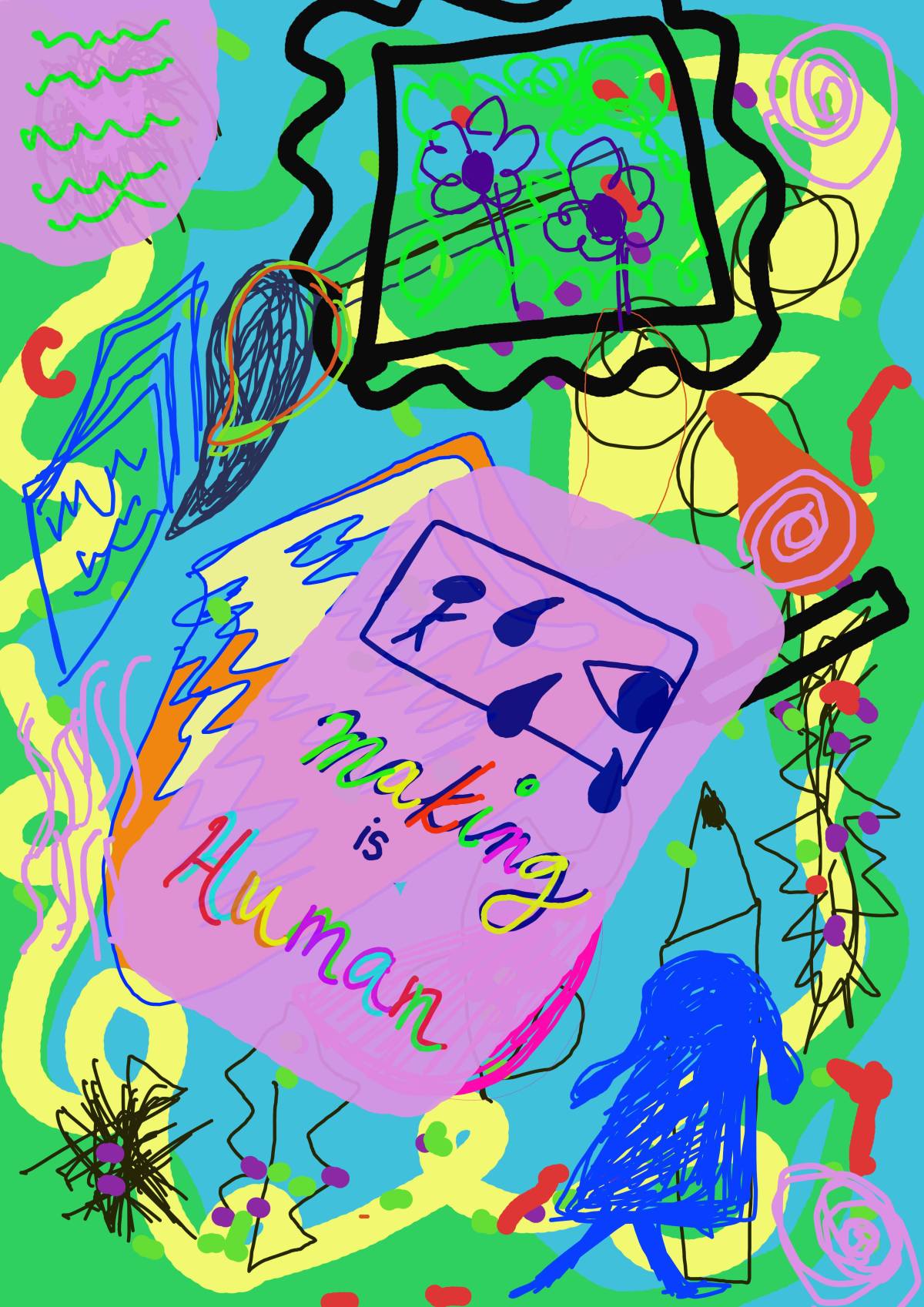
I will expand on this for a moment.. “Making” is a creative act, which will be different for everyone. Playing music is a creative act for some, playing a sport is a creative engagement for others. (We can argue that one “makes” the shot into the basket or “makes” a play.)
Find a making that requires a few muscle groups. It is easy to fall into an avoidant style dynamic with screens so save video games for another area of life.
Another thought: positive and productive activities that replenish are : self initiated, intentional, and helps you be “present” with yourself and your body. They are responses, not reactions. Many times I have witnessed people reacting to stressors by using the screen to “tune out”. This is not a restorative act and alienates, thereby turning off the ability to be truly present.
So go hang out with your body and make something! 💫💫💫💫💫💫💫💫💫
If you’re like me, you like your liquids. They’re hot, iced, and everything between. Savory or sweet. Caffeine, cocoa, cinnamon, cider, mulled, cream, alcoholic, grassy, fruity, tropical. And then there’s tea. Tea is water boiled in the good essences of organic matter like leaves, bark, roots, fruits, you name it. The beauty of tea is that there is no end to the possibilities. Even before the world closed, finding good affordable tea wasn’t easy. Artisanal was expensive, and many were sugary or bland. I lost interest when hype flooded the drink market.
Who knew literally boiling water and adding some stuff you have around the house would yield satisfying results ? Here is one I really came to love: Iced hibiscus date tea.
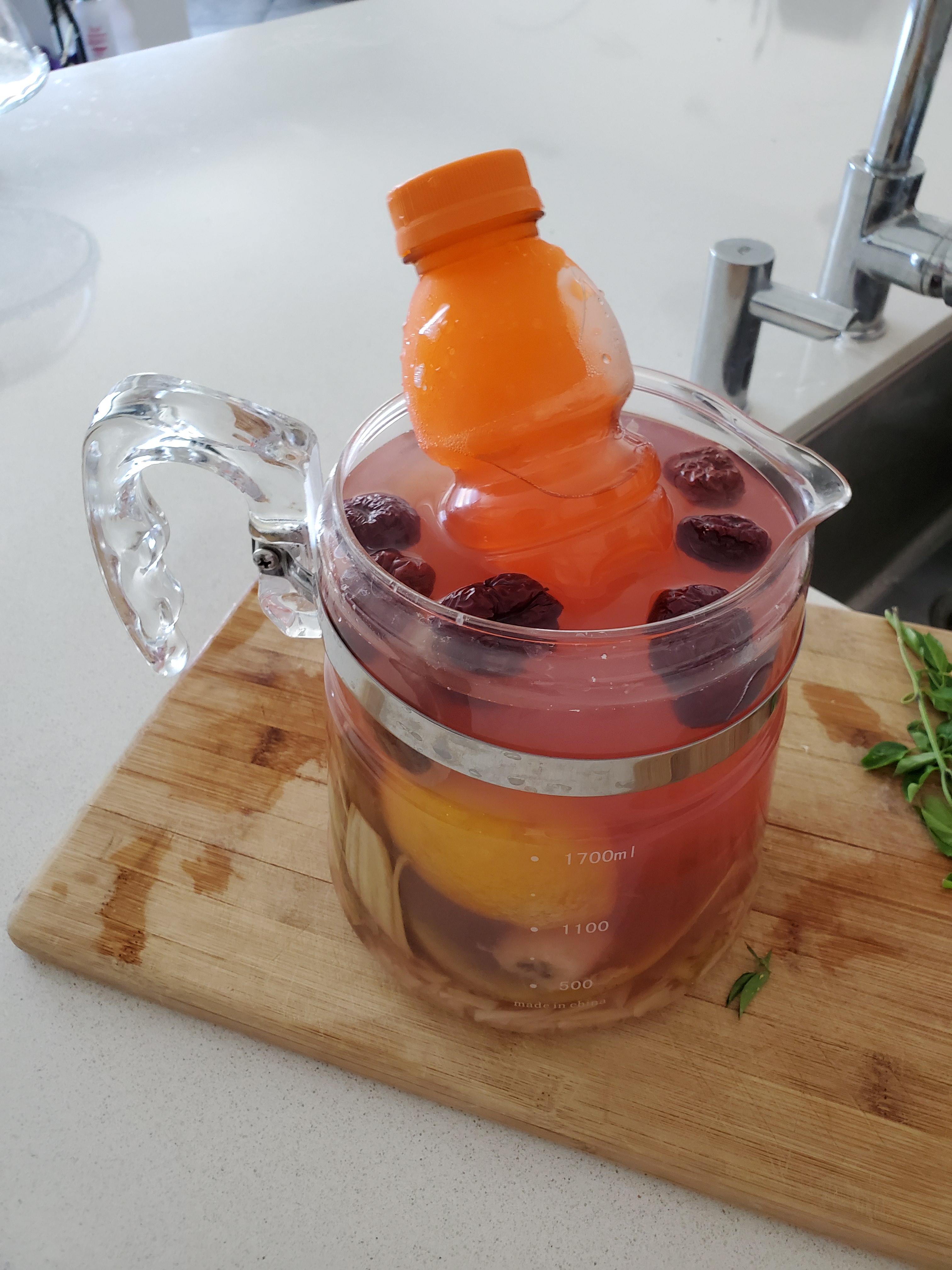
boil for 15 minutes:
hibiscus (1-2 tea bag)
ginger (1/3 cup matchsticks)
2 lemons
2 banana peels (cleaned with baking soda, organic)
1 banana flesh
dried asian dates (5-8)
agave syrup (to taste)
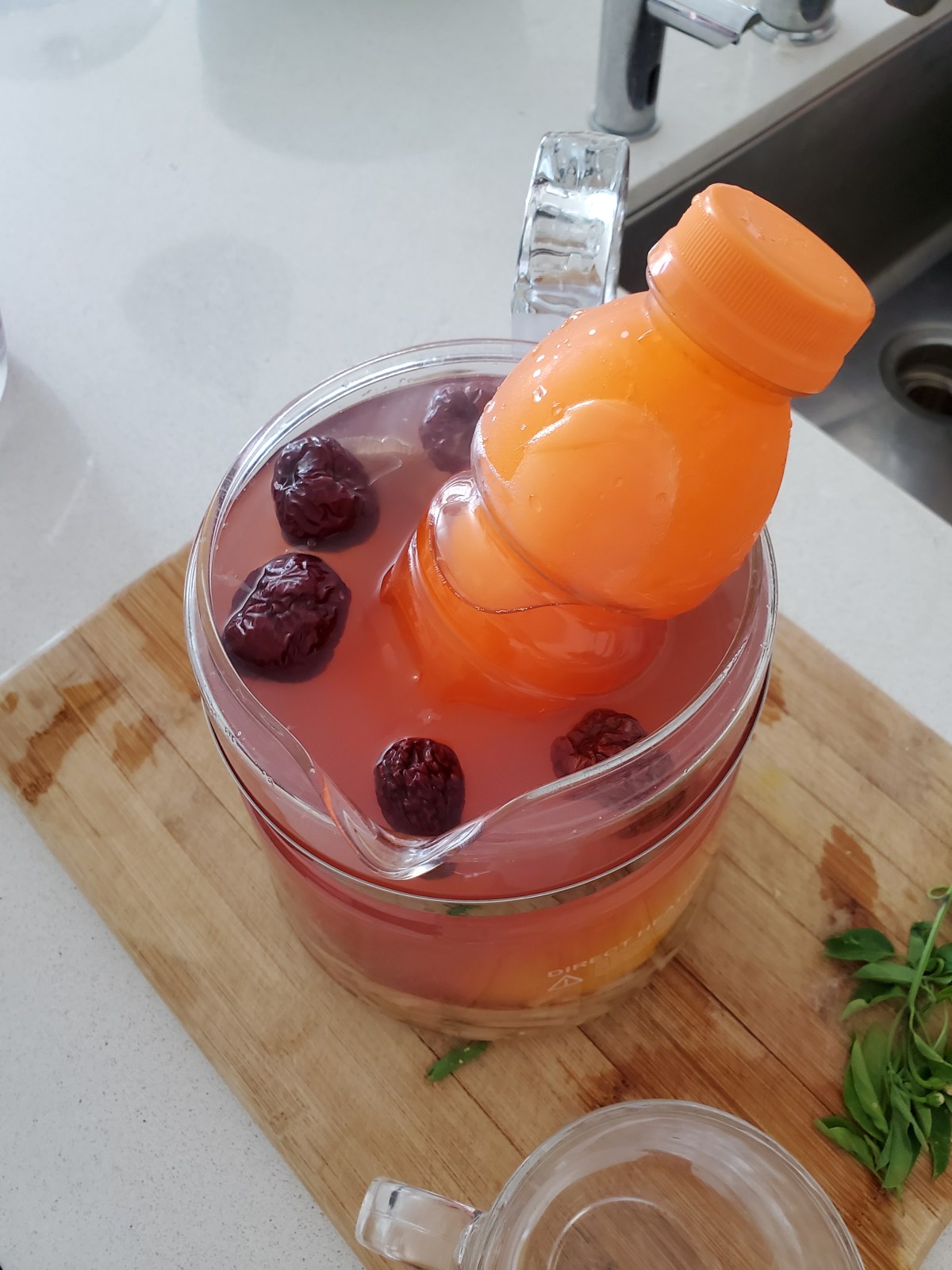
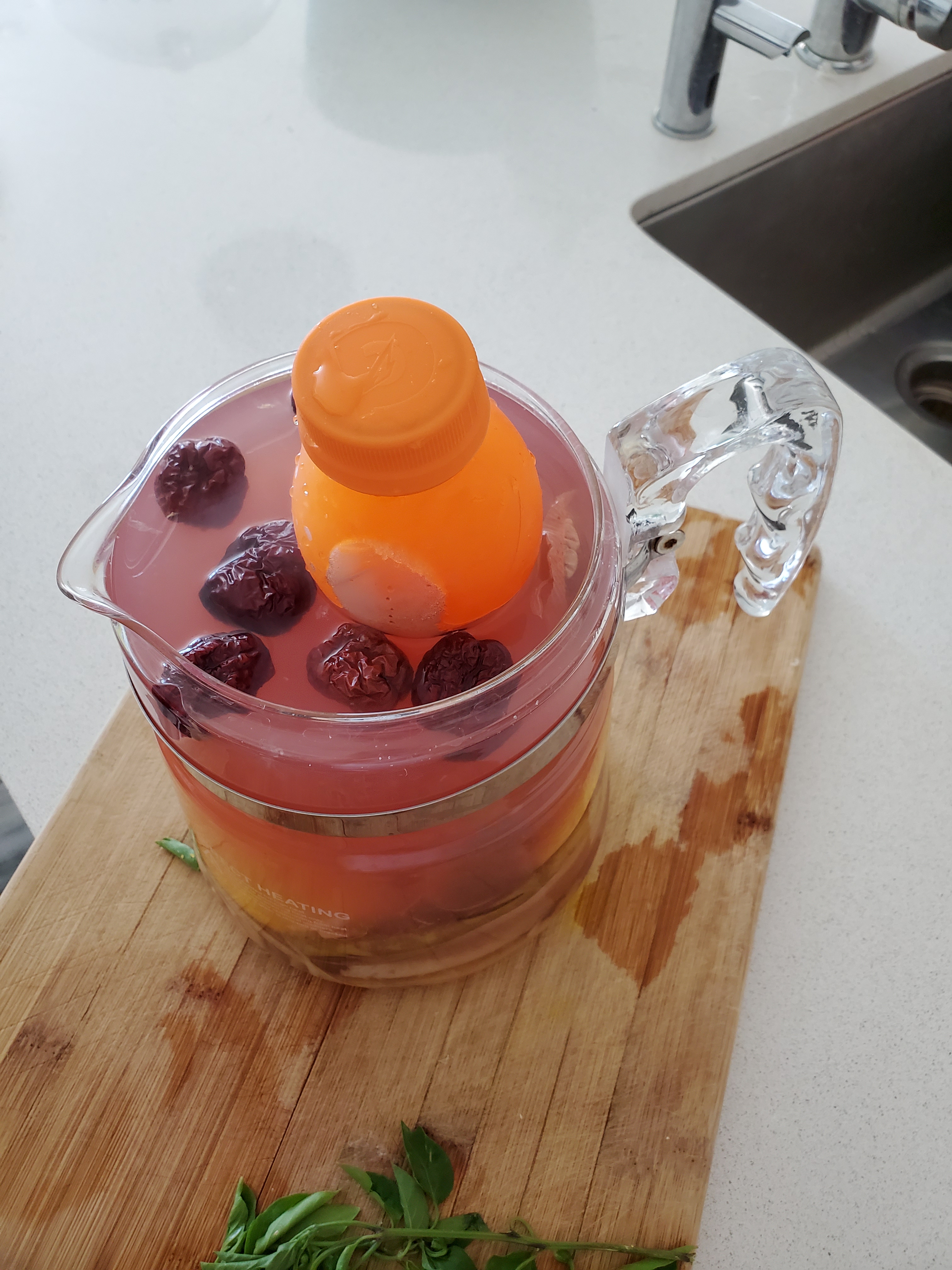
use a frozen drink to cool down the hot liquid without diluting it
add ice
Sip and
Enjoy
Under
The
Balmy
Festival
Solstice
Light
tip: freeze unused bananas, extra lemons, and ginger for easy tea making


 Noon Mul