When the World Feels Pointless…Is it because we are ignoring our internal compass?
I guess I’ve been quietly grieving. It’s not a personal loss, but one of value alignment.
We are conditioned to mostly chasing—passive cultural experiences, trendy overpriced foods, variations of things we already have, collectibles, small talk that loops infinitely– filling space and time with more, more, more while neglecting to feed the soul.
We have everything we could ever need for the remainder of our lifetime and probably many lifetimes over. I have worn my mom’s polyester nylon pajamas from the 70s for years and counting. When it comes to U.S. cultural experiences, there are few accessible ones outside the fart of shopping and occasionaloutdoor recreation.
We receive deeper joy in effort. Things that ask something from us. We haven’t embraced a lifestyle that nurtures our internal values.
I want to go more simple. Imagining my shelter and life as human or solar powered mobility through walking or biking. I’m not thinking like a traveler, but like a tortoise. Slow life. I’m inspired by a Korean woman who biked the world. She was not a cyclist to begin with, and just took on the challenge one day, documenting the journey– the universal moments along the way. Her philosophy is “before she returns to the universe, she wants to experience the universe.”
I’m also inspired by an American medical researcher for the U.S. State Department whom I met at a Korean temple stay. As her job required her to go to remote countries for months or years, she didn’t have a permanent residence. She showed up in the coldest region of Korea with a lightweight quilted overcoat, athletic shoes, and large book backpack.She lives out of this backpack for months at a time. It is her home base.
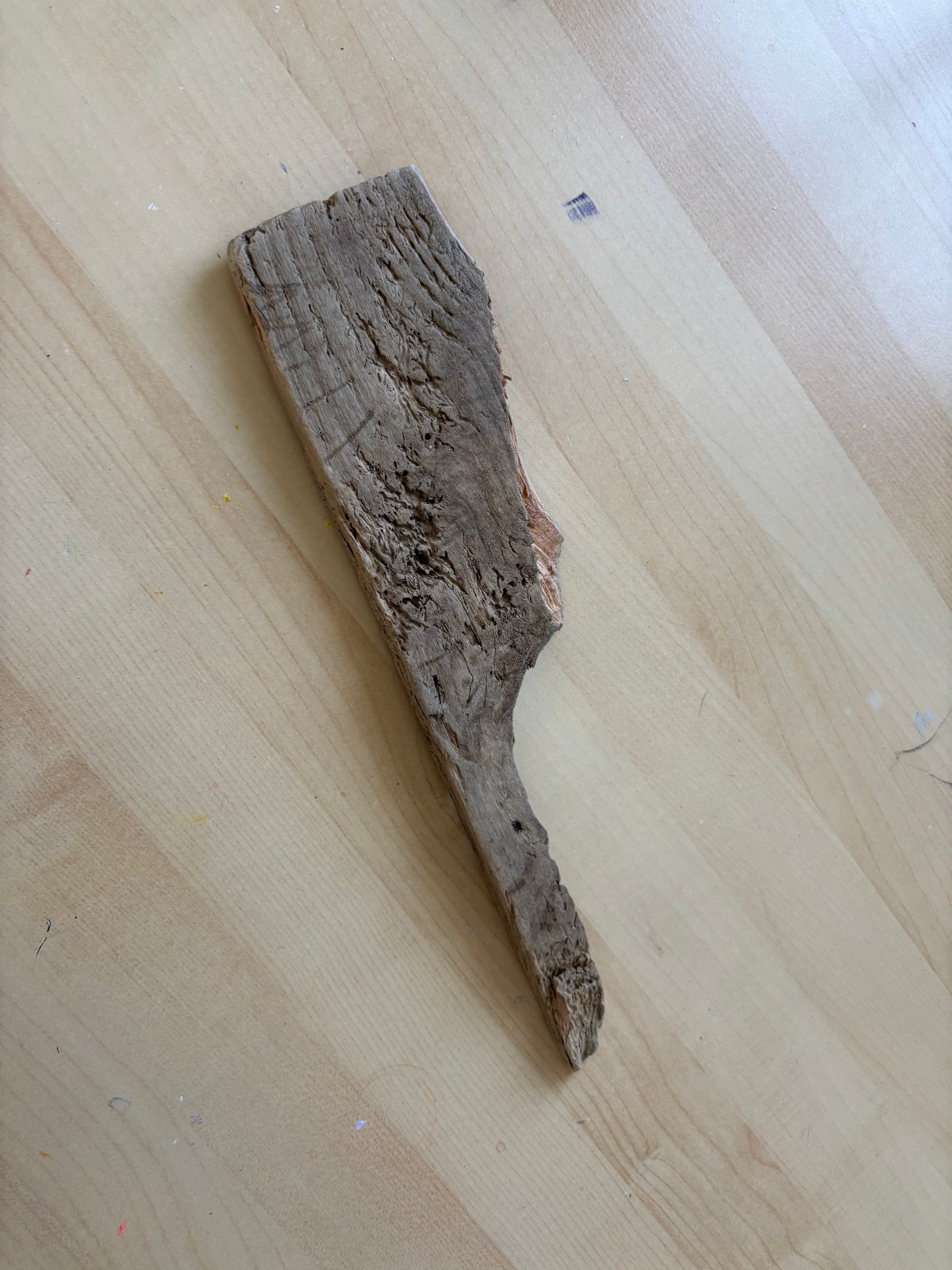
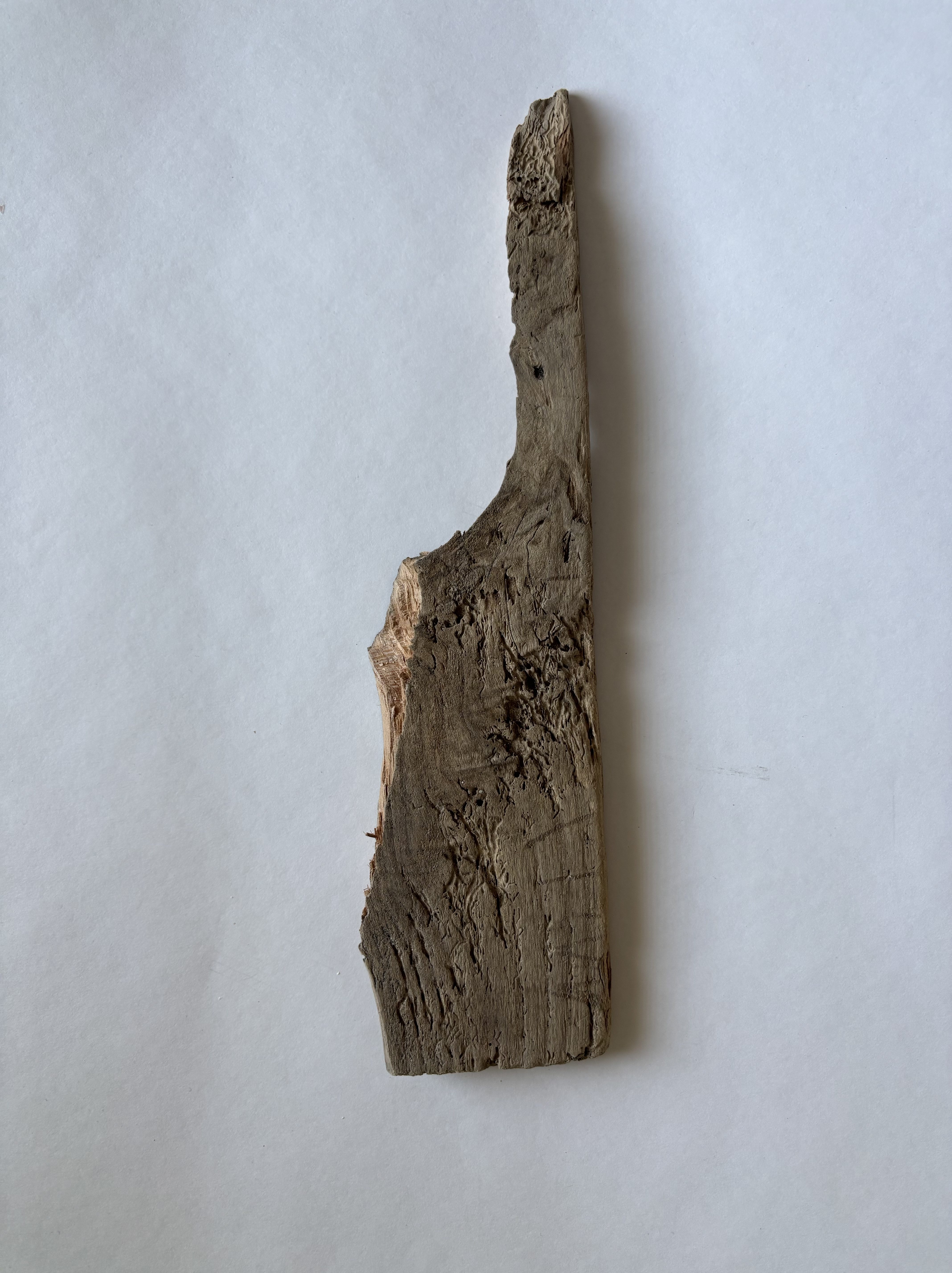
My internal compass is getting tuned. The tortoise mindset means I cut more possessions down to essential utility and dual purpose items that fit. A spork, a drybag, fast drying shorts that double as swimwear; deep pockets to store sticks. In this state, utility meats creativity. A piece of wonky driftwood I got on the beach now triples as a lightweight digging tool, poking tool, and dirt flattener. It was MVP in the build of a sand sculpture. It’s the kind of design I love: found, natural, simple. It’s the life I aspire to design: found, natural, simple.
the life I aspire to design: found, natural, simple.
When we think of gratitude, we picture it in the form of a verbal “thank you” or gift. Cats bringing their human a mouse, dogs licking their owner’s face, a friend remembering that you like banjos so they get you a tiny banjo keychain. When gifting or phrasing gratitude, we communicate or transfer those feelings. Feeling appreciation is great for the heart, and more enduring than a feeling is gratitude as a mood.
(Feeling bad after a breakup, I feel grateful for my unhinged music playlist filled with cello gobling, sun ra, and riotgrrl.)
“Gratitude is not just something we have, it can also be something we are,” says Dr. Feldstein, Stanford Chaplain. “Rather than simply knowing the feeling of gratitude, I can be the expression of gratitude that I am inside and share it with others as a way of being. In doing so, we can be a healing force for ourselves, those around us, and the world.”
Gratitude is not just something we have, it can also be something we are.
Sometimes gratitude is paired with feelings of satisfaction, awe, and connection to the world. DEEP gratitude is one that endures in environments where people connect and ritualize appreciation for the land and its food. (link coming soon)
When it comes to social gratitude, it’s a bit more complicated. Maybe because culturally we are raised to solve problems on our own and not bother others, we only request help at our most desperate. When in a deep struggle, a surprise lending hand reaches out for you. Then we feel a tsunami of relief and show our appreciation (saved my life!) with gifts. Or perhaps, we channel it through formal celebrations on Teacher, Veteran, and Parent Appreciation Days to honor the hard work and sacrifices of these individuals.
Outside of of reminders and displays of thanks, how can we practice gratitude as a mood?
“Reflection is an antidote to busyness. When we are busy, we typically don’t notice the wonderful things in our lives…,’ says Dr. Feldstein. ‘Some people say they don’t have time to stop and reflect, but it’s not about time. It’s about having a readiness to notice with appreciation and gratitude what is going on in the midst of our activity.”
It’s about having a readiness to notice with appreciation and gratitude what is going on in the midst of our activity.”
Although not religious, if I reflect on the times I’ve been dragged to Sunday mass half asleep, the conclusion of which was a levity and general well being, I can appreciate praise as a form of practicing gratitude. Mumbling latin, stuffy air, gospel readings, the monotonous congregational chants, prayers. Then the penultimate–“peace be with you” handshake and hug greetings with the members around you.
GRATITUDE AS ATTITUDE
Reframing gratitude as an attitude, like positivity, changes how we might harness its power.
What is the difference between mood and attitude? A mood is a prolonged emotion, and per this following study:
“…a major difference between an attitude and emotion is that an attitude tends to be more stable overtime, whereas an emotion lasts for a small period of time. Attitudes are comprised of three types of attitudes – cognitive, affective, and behavioral.
cognitive attitude
represents the advantages and disadvantages of the attitude object
For instance, what are the pros and cons of Peets coffee? A pro could be that it is delicious, but a con could be that it is expensive!
behavioral attitude
how our past behavior can inform our current attitudes
When we think about our past behavior, do we typically purchase Peets or Dunkin coffee? If Peets, then I may hold a favorable attitude toward Peets, but unfavorable attitude toward Dunkin.
affective attitude
the emotions elicited when we think about or utilize the attitude object
Drinking a cup of Peets could make me feel positive emotions such as joy and contentment, negative emotions such as guilt (maybe for spending too much money!), or even both positive and negative emotions – content and guilt at the same time!
Thus, an attitude object can elicit certain emotions, but attitudes and emotions are separate constructs…Attitudes are typically learned or acquired through our environments such as our upbringing and relationship experiences, and again, tend to remain stable over time.“
So when you’re feeling depressed, angry, or disappointed, harness your gratitude attitude to ride the wave without eating sand. Sonya might have gotten accepted to her dream school, but her dog died. Ray broke his hand and had to sit out of a career highlight basketball tournament but his girlfriend nursed him. Gratitude as attitude are the wings to help get your life out of the pits and back soaring.
Although counterintuitive to creativity, sometimes we need mass output to push ourselves to the next stage.
Have you noticed how something is being sold to us every second of being on the internet? Recipe filled with pop-up ads every 2 seconds, amusing shorts between pseudo-informative videos. Innocent people broadcast their lives, maybe trying to organically incorporate their sponsor’s products.
We don’t need any of it.
In the crowd of similar personalities there are genuine hobbyists and experts from whom you can actually learn new things. You can tell they are in it for the love, and not for material gratification.
Some of the people I follow do pottery, farm, sew, and forage wild edibles. Some have a quirky personality or just like to have fun with their viewers—like exercising on a bike machine while painting, making daily cucumber hats to stop suffering, raising rescue opossums as a character (or real?) psychic.
They usually do their thing for years with a small, but loyal, following. They sell some things casually—like paintings, the best fertilizer, a kit. But their existence is not a money-making venture; they don’t care about gaining as many followers and having high paying sponsors. You can tell—the popular entertainment personal brands have similar styles in their presentation, editing, and sounds.
I used to let my days meander and melt into one another as I experimented– because that’s creativity. Factory like output is for commercial artists. But making doesn’t always have to be sacred. Just because you care deeply about something doesn’t mean you have to manifest that always, immediately, and in every project as proof.
You’ve been told to separate art that you make for you and art that you make for everyone. It is not a betrayal of yourself to create for different audiences. It’s not like it’ll affect your admittance to the pearly gates.
The purpose of this post is that we can learn something from even the popular content creators. I noticed that people will have the same clothes for many videos. They bulk film content in a few days or weeks that they can spread out and publish over the course of months, possibly the whole year.
This has inspired me to try doing this for my work. Writing and painting in mass consolidation. Writing flows best in long dedicated time blocks anyway. Although counterintuitive to creativity, sometimes we need mass output to push ourselves to the next stage.
So for the months that I’m back in my studio, I’m using up my supplies to paint, draw, and film. Painting supplies are abundant, so I’ll do the most simple thing I know how to do– universally humorous animal paintings that I can produce at high output. I’ll edit and post a few videos (to hold myself accountable), scheduling publication as far out as ~2 months. Since the remaining footage can be edited from anywhere (post-production), having all the content already done eliminates the heavy production side.
Then of course there are always days we refuse to do any of it, so reducing friction by reducing steps is good life maintenance.
 Noon Mul